



By Prakruti Gupta Rao, Co-founder, The Kaftan Company · Updated September 2026
Quick answer: Yes, clothes can affect your mental health. Fashion psychology shows that what you wear shapes your mood, confidence and focus, often through the meaning a garment holds for you. Comfortable, breathable clothing that fits the body you have today reduces daily stress and supports healthier self-esteem. Clothing can support well-being, but it is not a treatment for mental health conditions.
You know the feeling. Some days you pull on a shirt and instantly sit a little taller. Other days, a waistband digs in at 11am and your mood quietly sours by lunch. That's not in your head. Well, it is, and that's exactly the point. Your brain reads your clothes as signals, all day long.
I started The Kaftan Company in Hyderabad in 2016 because I couldn't find clothes that were comfortable and stylish at the same time. Ten years later, the link between how we dress and how we feel is something I think about every day. This guide brings together what the research says, what we've learned making clothes for women across India, and simple things you can try from tomorrow morning.
Why Fashion and Mental Health Matter in India
Mental health is a much bigger part of everyday life in India than most of us talk about. India's National Mental Health Survey 2015–16, run by NIMHANS for the Ministry of Health and Family Welfare, found that about 10.6% of adults were living with a mental health condition, and roughly 1 in 20 adults were experiencing depression at the time of the survey (NMHS Summary Report).
Clothes won't fix that. But small, daily habits shape how we feel about ourselves, and getting dressed is one of the few habits every one of us repeats every day. That makes it worth getting right.
What Is Fashion Psychology?
Fashion psychology is the study of how clothing affects our thoughts, emotions and behaviour, and how our inner state shapes what we choose to wear. It sits where psychology, culture and design meet, and it works in two directions.
Outside in is the first. The fabric, fit, colour and style of a garment influence your mood, confidence and even focus. Inside out is the second. How you feel on a given day nudges what you reach for: low days often mean hiding in shapeless layers, while good days invite colour and print.
Psychologist Professor Karen Pine explores this in her book Mind What You Wear (2014). Her work suggests people reach for different clothes depending on their mood, and that choosing clothes linked to happier memories may help nudge mood the other way. In simple terms, your wardrobe isn't just a set of outfits. It's a daily conversation with yourself.
Enclothed Cognition: How Clothes Shape Self-Esteem
Enclothed cognition is the idea that clothes influence how we think and act, based on the meaning we attach to them. The term comes from a 2012 study by Hajo Adam and Adam Galinsky published in the Journal of Experimental Social Psychology.
In their experiments, people who wore a white coat described as a doctor's coat did better on attention tasks than people told the same coat belonged to a painter. Same coat. Different meaning. Different result. Two things had to happen together: the person had to wear the garment, and the garment had to mean something to them.
That second part matters most for self-esteem. When your clothes carry meanings like this is me, I feel good in this or I chose this for myself, you send your brain a small, repeated message of self-respect. When they carry meanings like I'm hiding or I'll wear this once I lose weight, the message runs the other way. Self-esteem isn't built in one big moment. It's built in dozens of small daily choices, and getting dressed is one you make every day.
Comfort, Body Image and the Quiet Stress of Tight Clothes
Uncomfortable clothing is a small but constant stressor, and it pulls your attention towards your body in a critical way. A waistband that pinches or a fit that clings in the wrong places keeps reminding you of your body all day, and rarely kindly.
This links directly to body image. Clothes that only "work" on one body type quietly tell everyone else they don't fit. Many women know the loop: the size label feels like a verdict, the mirror feels like a test, and getting dressed starts to feel like failing.
Comfort breaks that loop in three ways. Less sensory noise comes first: soft, breathable fabrics like cotton, modal and viscose rayon mean fewer distractions from itching, sweating or squeezing. Freedom of movement is next: when you can sit cross-legged, stretch, chase a toddler or dance in the kitchen, your body feels capable rather than constrained. Finally, fit that adapts to you: flowing silhouettes that skim rather than cling let the garment adjust to your body, not the other way round.
Comfort isn't giving up on style. It's refusing to let style cost you your peace.
Colour, Print and Dopamine Dressing
Dopamine dressing means wearing colours and prints that make you feel joyful, on purpose, to lift your mood. The name borrows from dopamine, the brain chemical linked to pleasure and reward. It's a popular idea rather than a clinical one.
What does the science say? A major review of colour psychology research found that colour can influence how we feel and behave, but the effects depend heavily on context and on what a colour means to each person (Elliot and Maier, Annual Review of Psychology, 2014). In other words, there's no universal "happy colour".
Still, some associations come up often. Blues and teals tend to feel calm and grounding. Oranges and corals feel warm and energising. Greens feel fresh and balanced, soft pastels feel soothing on a slow day, and bold multi-colour prints feel playful and confident.
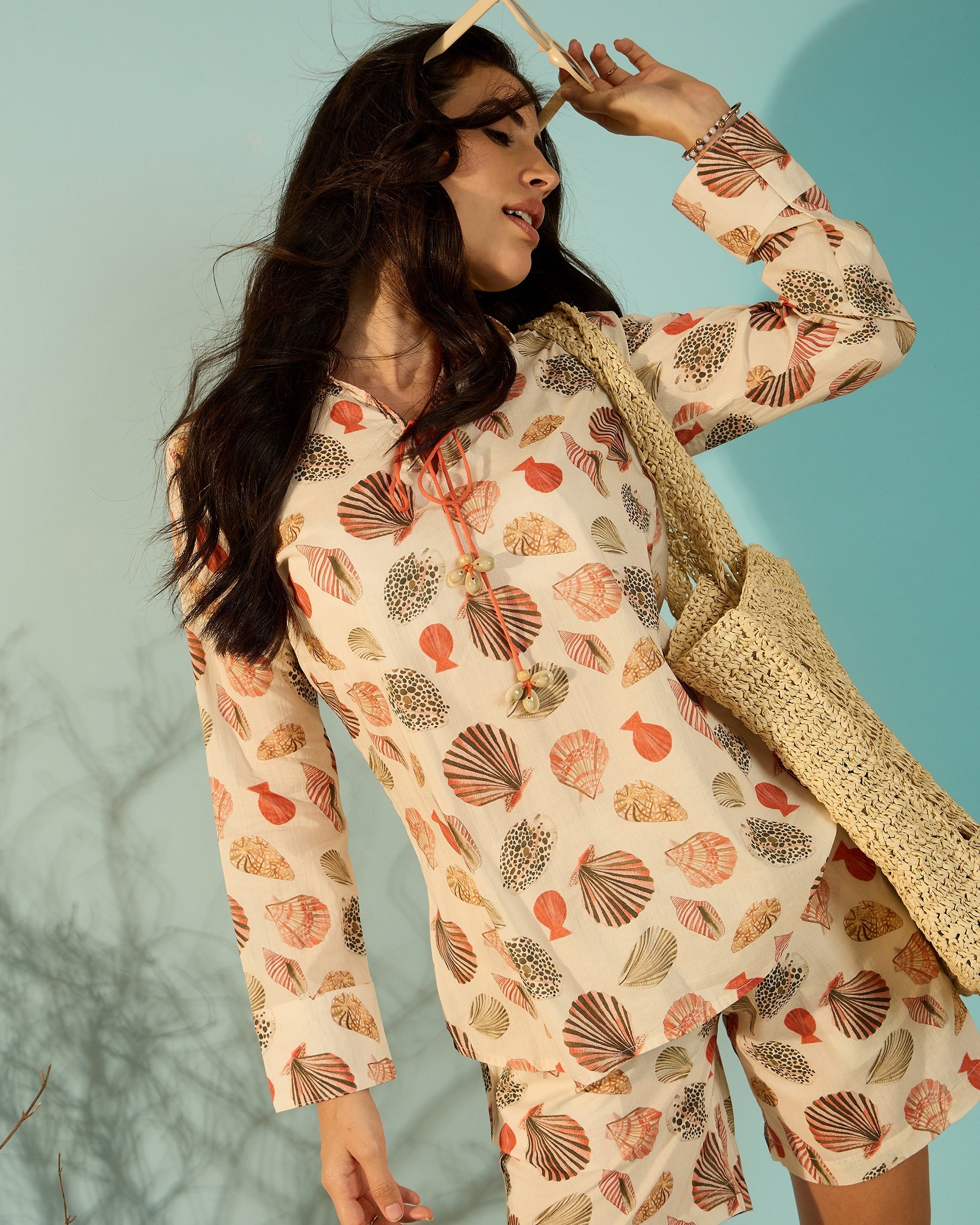
In India, colour carries even more meaning. It's woven into festivals, rituals and family memories. A print that reminds you of your grandmother's garden or a holiday in Goa can do more for your mood than any trend report. That's why every TKC print is designed in-house: we want each one to feel like a small, personal spark of joy, not something you've seen on everyone else.
Nightwear, Sleep and the Ritual of Winding Down
What you wear to bed matters because sleep and mental health are closely linked, in both directions. According to the Sleep Foundation, poor sleep can worsen mental health, and mental health problems can disturb sleep, so the two can feed each other in a loop. Good sleep habits help break that loop.
Your nightwear is part of those habits. In a hot, humid climate like much of India's, heavy synthetic fabrics trap heat and sweat. Soft cotton or modal lets skin breathe, so your body can settle instead of fidget.
There's a psychological side too. Changing out of "outside clothes" into nightwear works as a transition ritual. It tells your brain the day's roles are done: no more manager, host or problem-solver. Just you.
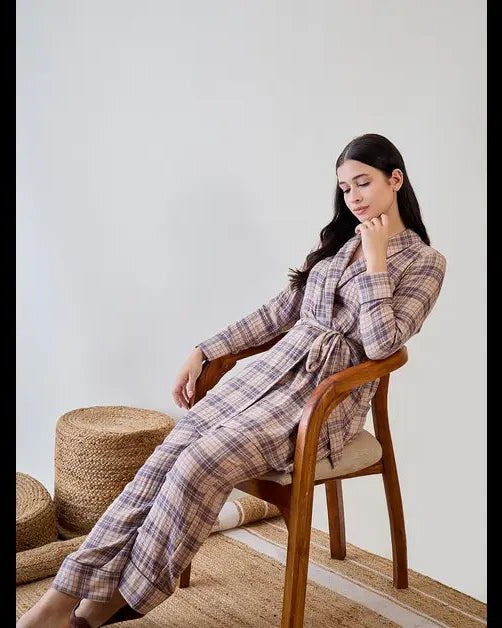
To make that ritual work harder, keep nightwear for rest, so it becomes a clear "time to switch off" cue. Retire the tired T-shirt, because sleeping in something faded and stretched out sends a small message that your rest doesn't deserve care. And choose something that feels a little special: a soft nightdress or pyjama set you love can turn bedtime from a chore into a moment you look forward to.
How to Dress for Better Mental Well-Being
Dressing for well-being should feel like self-care, not another rule to follow. A few principles help.
Dress for the day you want, not the one you fear. On a low day, try one piece you love rather than the easiest thing on the chair. Buy for the body you have today. Clothes waiting for a "someday" body keep a quiet sense of failure in your wardrobe.
Make comfort non-negotiable. If it pinches, scratches or needs constant adjusting, it's costing you more than it looks. Pick fabrics that breathe. Cotton, modal and viscose rayon suit India's climate and feel kind against the skin.
Wear your colour. Notice which colours and prints lift you, then let them into your everyday, not just your occasion wear. Get dressed, even at home. Swapping pyjamas for soft loungewear on a work-from-home day can sharpen the line between rest and focus. Edit with kindness. Let go of pieces tied to bad memories or unkind self-talk, and keep the ones that feel like you.
What 10 Years of Making Kaftans Has Taught Us
After a decade of designing for women across India, our biggest lesson is simple: when clothes are made to fit real bodies, women feel freer in them.
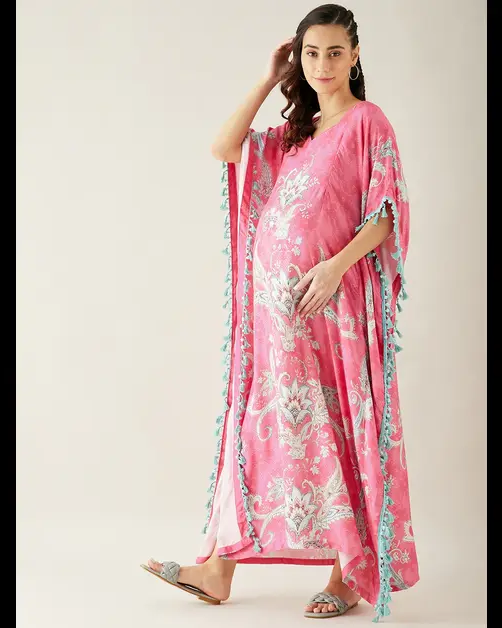
Every body deserves beautiful clothes. Our kaftans run from S to 3XL, and 3XL is one of our best-selling sizes. That tells us how many women were underserved by fashion that stopped at L. Flow beats force. We design silhouettes that skim rather than cling, with kaftan extended sleeves that move with you.
Fabric is felt before it's seen. We work mainly in cotton, modal and viscose rayon, because in Hyderabad's heat you notice breathability within minutes. Prints should feel personal. Every TKC print is designed in-house as a digital print, so it's yours, not the season's most copied pattern. Feeling good includes how it was made. Digital printing uses less water and dye, and our production runs on near-zero fabric waste.
When to Look for More Support
Clothes can support well-being, but they're not a treatment. If low mood, anxiety or stress are affecting your daily life, please reach out to a mental health professional or someone you trust. In India, Tele-MANAS, the Government of India's free 24/7 mental health helpline, is available on 14416 or 1-800-891-4416, in multiple languages.
Key Takeaways
- Fashion psychology shows that clothes shape mood, confidence and behaviour, and that mood shapes what we wear.
- Enclothed cognition (Adam and Galinsky, 2012) found that clothes affect performance based on what they mean to the wearer.
- Comfortable, breathable clothing that fits your body today reduces daily stress and supports a kinder body image.
- Colour effects are personal, so wear the colours and prints that lift you.
- Sleep and mental health are closely linked, and breathable nightwear plus a wind-down ritual supports better rest.
- Clothes support well-being but don't replace professional help. In India, call Tele-MANAS on 14416.
Frequently Asked Questions
Can clothes really affect your mental health?
Yes, in everyday ways. Clothing influences mood, confidence and physical comfort, which all feed into well-being. Clothes can support mental health, but they don't replace professional care.
What is fashion psychology?
Fashion psychology studies how clothing affects our emotions, thoughts and behaviour, and how our moods shape what we choose to wear.
What is enclothed cognition?
Enclothed cognition is the effect clothes have on how we think and act, based on what they symbolise to us. The term comes from a 2012 study by Hajo Adam and Adam Galinsky.
What is dopamine dressing?
Dopamine dressing is choosing colours and prints that make you feel happy, on purpose, to lift your mood. It's a popular approach, not a clinical therapy.
How does clothing affect self-esteem?
Clothes that fit your current body and reflect your personality send repeated signals of self-acceptance. Ill-fitting or uncomfortable clothes can keep your attention on perceived flaws.
What fabric is best for sleeping in hot weather?
Breathable natural or plant-based fabrics such as cotton, modal and viscose rayon are best for hot, humid nights. They let air move and help keep sweat off your skin, unlike heavy synthetics.
What should I wear to feel more relaxed at home?
Choose loose, breathable pieces in soft fabrics, such as a cotton kaftan or a modal pyjama set. Keeping separate loungewear and nightwear helps your brain switch between focus and rest.
Are kaftans good for all body types?
Yes. A kaftan's relaxed, flowing cut skims the body rather than clinging, which makes it flattering and comfortable across a wide range of shapes and sizes.
The Last Word
Getting dressed is one of the smallest things you'll do today, and one of the most repeated. Done with a little kindness, it becomes a daily act of self-respect, whether you're heading out for the day or curling up at home in something soft.
That's what Live Free means to us: wearing what lets you breathe, move and be yourself. As I often say, "I don't make clothes to be looked at. I make them to feel free in." Explore our kaftans or shop nightwear made for real rest.
About the Author
Prakruti Gupta Rao is the co-founder and Managing Director of Shibumi Fashion Pvt. Ltd., the company behind The Kaftan Company. She founded TKC in Hyderabad in 2016 after struggling to find clothing that was both comfortable and stylish. Over ten years she has led the brand's design of kaftans, nightwear and loungewear, and grown it across India's leading fashion marketplaces and a flagship store in Banjara Hills, Hyderabad.
Editorial note: Prakruti is a fashion founder, not a mental health professional. This article is for general information and draws on the published research listed below. It is not medical advice.
References
- Adam, H. and Galinsky, A. D. (2012). Enclothed cognition. Journal of Experimental Social Psychology, 48(4), 918–925. doi.org/10.1016/j.jesp.2012.02.008
- Elliot, A. J. and Maier, M. A. (2014). Color psychology: Effects of perceiving color on psychological functioning in humans. Annual Review of Psychology, 65, 95–120. doi.org/10.1146/annurev-psych-010213-115035
- Gururaj, G. et al. (2016). National Mental Health Survey of India, 2015–16: Summary. NIMHANS, Bengaluru. Ministry of Health and Family Welfare
- Pine, K. J. (2014). Mind What You Wear: The Psychology of Fashion.
- Sleep Foundation. Mental Health and Sleep. sleepfoundation.org/mental-health
- Tele-MANAS, Ministry of Health and Family Welfare, Government of India. telemanas.mohfw.gov.in

